

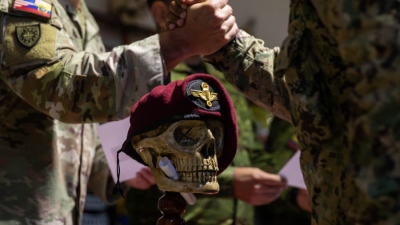
The American campaign against drug cartels in Latin America appears to be entering a new and far more aggressive phase. US Army Green Berets are operating alongside Ecuadorian forces in the province of Esmeraldas, on the border with Colombia, according to official statements by Ecuadorian officials. The revelation carries particular significance, as it shows that the US military presence in the region is no longer limited to training, intelligence, and operations at sea. The governor of Esmeraldas, Juan Jaramillo, stated that local forces are collaborating with the US Army's 7th Special Forces Group. "We are together with the US Army's 7th Special Forces Group. We are working together in the fight against narcoterrorism," Jaramillo told reporters. However, neither the number of American troops nor the exact nature of the operations have been made public. United States Southern Command declined to provide details, citing operational security concerns. Therefore, participation in joint operations is confirmed from the Ecuadorian side, but there are no public data showing precisely what role the Green Berets assume in each mission.

Green Berets next to the cartels
The 7th Special Forces Group (Airborne) is the unit of the US Green Berets whose primary geographic area of responsibility is Latin America. Its personnel were already in Ecuador in previous months, and in May they participated in multi-day joint training with the country's armed forces. Juan Jaramillo's recent statements, however, now speak of operations in Esmeraldas against organizations that the governments of both countries designate as narcoterrorist groups. Esmeraldas represents a particularly critical area. It borders Colombia and lies along routes used for transporting cocaine toward the Pacific, while in recent years it has been hit by extreme violence linked to organized criminal groups.
Two US warships also in the game
The deployment is not limited to special forces. Ecuadorian Defense Minister Gian Carlo Loffredo announced on August 20 that two US warships, along with interceptor craft, are set to operate from the area of Manta. During the same period, the USS San Antonio and the destroyer USS Gridley had crossed into the eastern Pacific as part of the increased US military presence in the region. In other words, Washington is now combining special operations forces on the ground, naval units, and airstrikes at sea.
Donald Trump and the "Shield of the Americas"
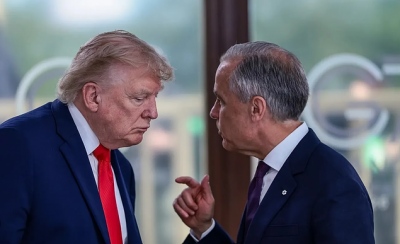
This strategy forms part of the major initiative presented in March by Donald Trump in Miami under the name Shield of the Americas. Here, an important correction is required regarding certain media reports: it was not merely "12 countries" that formed the framework. On March 7, the White House officially announced that the "Pan-American coalition against cartels" had already gathered commitments from military representatives of 17 countries. More than a dozen leaders and representatives from Latin America and the Caribbean attended the Shield of the Americas summit. Daniel Noboa's Ecuador proved to be one of Washington's closest partners in the new strategy. Trump's declaration was remarkably clear regarding its philosophy: the US and its allies will utilize military forces, training, and other available mechanisms to deprive cartels of territory, funding, and armed operational capacity.
The raid that caused an uproar: They "struck a drug camp" – The New York Times found a livestock farm
The new strategy has already raised serious questions. In March, US and Ecuadorian authorities presented operations near the border with Colombia as strikes against infrastructure belonging to armed traffickers. One of these turned into a major controversy. The New York Times traveled to San Martín and concluded, following interviews with the owner, workers, and local residents, that the location presented by authorities as a facility of an armed organization appeared to be a livestock and dairy farm. Residents and the owner denied that a drug trafficking camp operated there. There is, however, another critical detail: according to the investigation by The New York Times, American troops did not directly participate in the specific bombing recorded on video, even though the Pentagon had presented the broader operation as a joint US-Ecuadorian action. The Ecuadorian side continues to maintain that the area was being used by armed groups.
Dozen strikes and 223 dead
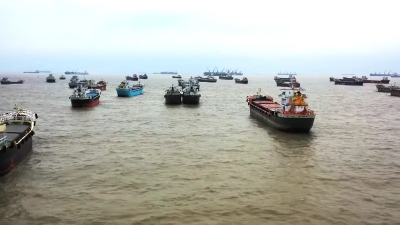
The picture at sea is even bloodier. Operation Southern Spear, which launched in 2025 with a mission—according to the US Department of Defense—to disrupt the flow of drugs from organizations designated as terrorist groups, has led to an unprecedented series of US military strikes against suspected vessels in the Caribbean and eastern Pacific. By August 24, 2026, US forces had conducted 67 strikes, resulting in 223 deaths. At least 64 speedboats, as well as other vessels characterized by US authorities as drug transport craft, have been destroyed. These figures surpass even those circulating a few months earlier, when the tally stood at 62 strikes and at least 200 dead. The major question: who is actually aboard these vessels? The Trump administration contends that the military campaign targets "narcoterrorists" and forms part of a broader effort to curb the drugs entering the United States. However, a key point of criticism is that Washington has released minimal evidence regarding most of the specific destroyed vessels and the identities of the people killed. In August, Reuters documented testimonies from fishermen in Ecuador who described a far more complex reality: cartels recruit or force impoverished fishermen to transport cargo, while victims' relatives and survivors have disputed that everyone targeted belonged to criminal organizations. The Trump administration rejects the criticism and maintains that the operations have weakened trafficking networks.
DEA undercuts claim that strikes stopped cocaine
The biggest question, however, is whether the strategy is working. In July, The Washington Post revealed a DEA assessment according to which military strikes had not noticeably reduced either the supply or the price of cocaine in the US. Traffickers, rather than stopping, altered their tactics: they began moving closer to the coastlines, utilizing larger vessels and aircraft, and avoiding areas where US forces operate. Pentagon officials also informed Congress that no reduction in cocaine purity had been observed. This contradicts repeated public statements by Donald Trump, who has asserted that maritime drug trafficking has been reduced almost completely. The White House, for its part, insists that military pressure causes severe disruption to cartels and deters traffickers.
From the "war on drugs" to a real military front?
And here lies the element that changes the entire picture. For decades, the United States treated drug trafficking primarily as a matter for law enforcement, the Coast Guard, the DEA, and intelligence cooperation. Now, Green Berets appear on the ground, warships along the coasts, airstrikes at sea, and government declarations designating cartels as terrorist organizations. The line between fighting organized crime and conducting a full military campaign is becoming increasingly thin. And Ecuador appears to find itself on the front line of this new American drug war.
www.bankingnews.gr






Σχόλια αναγνωστών